The Waldorf Method (II)
If a few days ago we learned about the most characteristics of the Waldorf method And its origin, today we delve into its curriculum and important subjects to achieve its goal of educating children to be free as the foundation of a true social renewal.
Eurythmy, the art of movementCurriculum
The main subjects are taught in morning lesson blocks of up to two hours over several weeks. These blocks are integrated into many classroom activities, and the topics will be repeated throughout the years, increasing in complexity as students develop their skills, reasoning ability, and sense of self.
Art, music, gardening, and mythology are fundamental in Waldorf education, which is why these subjects are taught from preschool. During the early stages, students paint, draw, braid, sculpt, weave, and crochet. As they progress to higher grades, the complexity of these tasks increases. They learn skills such as sewing, woodworking, stone carving, metalwork, doll making, and puppetry...

Music is another important topic in the Waldorf methodology, and it starts from early childhood with choral instruction. Instruments such as flutes or lyres are gradually introduced until ending with orchestral instruments.
And the most important subject for Waldorf schools is Eurythmy, the art of movement that accompanies texts or music and includes elements of theater and dance. It is designed to provide a sense of integration and harmony.
Languages are also important for this method, which is why they teach English and German starting from first grade.
Music in the Waldorf MethodEarly childhood education: preschool.
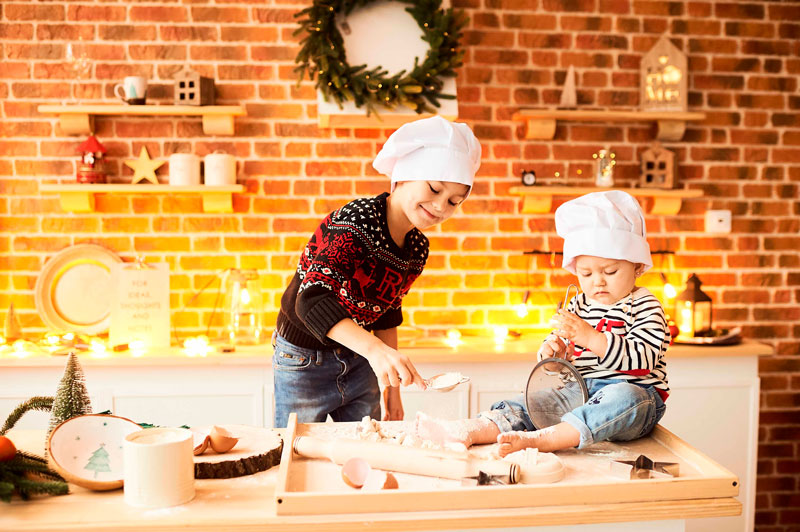
The kitchen in the Waldorf methodAt this stage of development, children learn through imitation, which is why education in this cycle is based on practical activities and experiences that allow the child to learn by example.
The foundation of the daily routine is free play, artistic activities like drawing or painting, singing songs, telling stories, and practical tasks such as gardening, cooking, or cleaning. Classroom work is alternated with outdoor activities.
The materials used are natural, such as wood, which lend themselves to imaginative play, leaving aside electronic devices (computers, tablets...) that imply passivity and hinder imagination.
Primary education: from 6-7 years old to 12-14 years old
Reading and writing in the Waldorf methodAt this stage, reading and writing are introduced for the first time, never before, as Steiner believed that doing so earlier could negatively affect the child's development.

These activities are accompanied by artistic work such as storytelling, drama, movement, vocal and instrumental music, and crafts. In addition, basic subjects are taught: history, geography, algebra, geometry, biology, physics, chemistry, geology, languages, astronomy, nutrition, mineralogy, language arts, and mythology.
In the Waldorf method, the competition between students is attempted to be eliminated, prioritizing cooperation and assistance among them. In this sense, competitive sports are introduced in secondary education. The same group of children is also maintained throughout the school years, developing as a social group.
Secondary education: from 12 years old upwards
At this stage, specialized teachers in each subject are the ones who teach the classes, and although the focus is mainly on academic subjects, classes in art, music, and crafts are still taught.
In secondary education, the intellectual understanding of students, independent judgment, and ethical ideals are encouraged. The goal is to provide young people with the foundations to become free, morally responsible, and integrated individuals.
Leave a comment
Log in to post comments