Games that help with baby development
Playing is a privileged means for the comprehensive development of a baby's capacities: social, communicative, emotional, intellectual, and motor skills, allowing the child to learn and develop in a balanced way. Playing also makes the time spent together by parent and child much more enjoyable.
Some years ago, it was believed that newborns could not relate to the outside world because they were thought to be passive. Currently, it is known that the baby has the need to perceive and interact with the world around them. For this reason, games must be simple and suitable for each age to promote their intelligence and abilities.
Between 0 and 2 years old, functional or exercise play emerges. Evolutionarily, it is the first to appear and consists of repeating an action over and over: grabbing, hitting, or sucking.
Dropping and retrieving a pacifier will be a typical game for a baby of a few months, while opening and closing a door or going up and down stairs will be games typical of the end of this period.
If instead of doing it with objects, it is done with people, it is called social interaction play, among which are clapping hands, "Five Little Ducks," hiding and reappearing. At first, it is the adult who leads the game, as time passes, the roles are exchanged, and the child takes the initiative.
Developmental stages of play in babies
- From newborn to 6 months
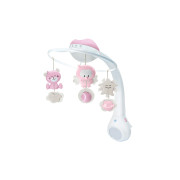
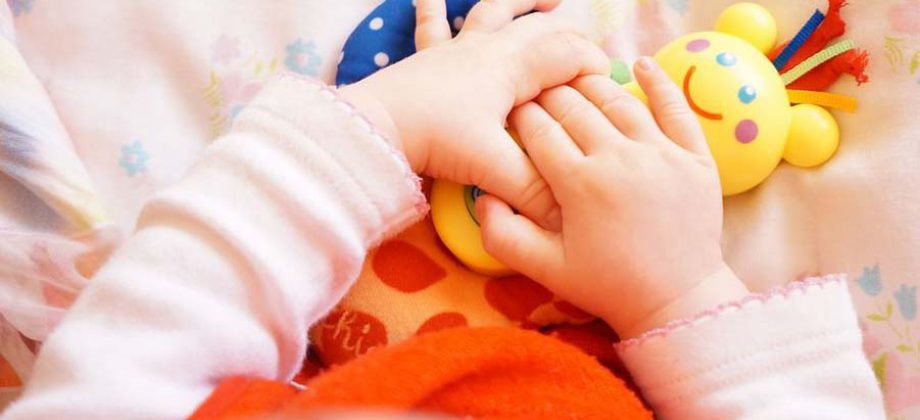
At this stage, babies' ability to manipulate objects is limited. They relate to the world through sight, hearing, and touch. They prefer noisy and brightly colored objects such as teethers, mobiles, balls, soft toys, and rattles.
Singing to the baby while hugging or putting them to sleep, dancing with them, and rocking them to the rhythm of simple melodies are activities suitable for this stage.
- Children from 7 to 12 months
At this stage, the baby remembers very simple concepts. They can identify someone and even recognize parts of their body. At this age, they are interested in: balls, toys with wheels, large blocks, and stuffed animals. It is at this stage that the child starts exploring objects, putting them in and out of a box, and also begins to imitate sounds.
- Children from 12 to 18 months
At this age, the child can already walk, follows their parents everywhere, and imitates their actions. They enjoy manipulating objects, can say several words, and understand some ideas.
Books come into play. Babies enjoy being told stories, with striking illustrations and textures to touch. They also like toys to drag and push, and puzzles. Children's songs are excellent for developing the child's language and fostering adult-child dialogue. Additionally, simple movement games like clapping hands or playing peek-a-boo will be their favorites. At this stage, it is also important to enhance the child's artistic side by allowing the use of stickers, colors, and paints.
Benefits of playing appropriately with the baby
- They develop language skills more rapidly
- They learn to be active during waking periods and to fall asleep peacefully.
- They have a good appetite and eat without problems.
- They are in a better mood and cry less.
- They are more receptive
Leave a comment
Log in to post comments