Keys to safe babywearing
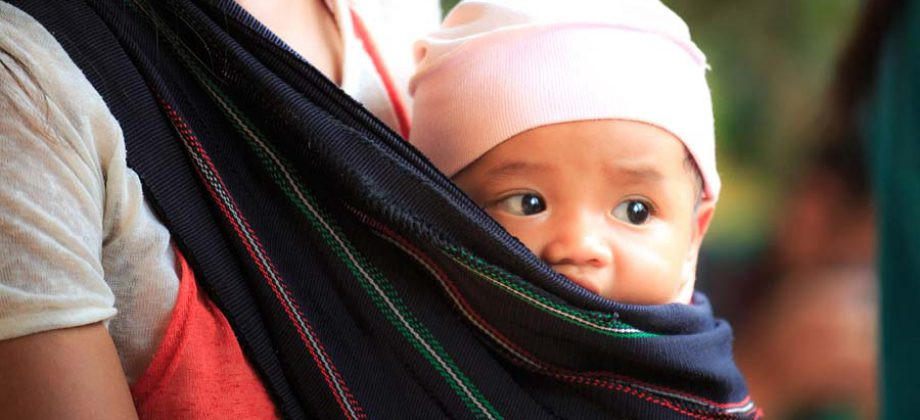
When we think about the arrival of the baby and the method we are going to use for their transportation, we inevitably think about the stroller, leaving the [other option] in the background. porting, an alternative to consider for the multiple benefits it brings to the baby and the carrier, as well as for making many daily moments with a baby easier.
With the arrival of the stroller in the world of childcare, babywearing, despite being the most primitive method of transportation, has fallen out of use for a while. And although it is now more common to see parents babywearing their babies, there are still some who are hesitant to babywear and others who don't do it properly.
Benefits of babywearing
- When a baby is carried, they are in direct contact with their parents, feeling the warmth and hearing the heartbeat, which allows them to The baby feels more secure and can sleep better. and that's it Strengthen the bonds. between the parents and the baby.
- Promote breastfeeding., promoting milk production through contact with the baby.
- Avoid plagiocephaly since the baby's head is not in the same position supported on a rigid surface for a prolonged period of time.
It also has benefits for the carrier:
- By leaving your hands free, it allows you greater freedom of movement to perform other tasks such as shopping, doing laundry, reading, and you can even go for a walk without the need to carry the cart.
- In women, contact with the baby reduces the risk of postpartum depression.
- And finally, if used correctly, baby carriers They protect and strengthen the muscles of the back.
How to carry correctly
Safe babywearing is one that respects the child's timing and psychomotor development, and for this to happen, the baby carrier must be ergonomic.
How do I know if a baby carrier is ergonomic?
For a baby carrier to be ergonomic, It must fit the child's body. with fabrics that are not rigid and also It must adapt to the different stages of anatomical, physiological, biomechanical, and psychomotor development of the child.. Therefore, it is important for us to know that the spine of babies forms a large "C" from the neck to the buttocks, and that their legs maintain the frog-like position they adopt in the mother's womb during the first months of life.
Therefore, an ergonomic baby carrier is one that allows the baby's spine and legs to maintain their natural position; the spine in a C shape and the legs in an M shape or frog position.
By keeping the legs in an M shape, the The baby will maintain the correct "sitting" position. Secure the entire fabric and distribute the weight evenly in the baby carrier to prevent the child from hanging or sitting on their genitals, a posture that should always be avoided as it is not ergonomic or recommended.
Another non-ergonomic position to avoid is having the baby facing outward, with their back to the carrier. This position becomes non-ergonomic as it does not allow the baby's spine to maintain its natural C shape posture, and their legs and hips also do not maintain the frog-like position.
If a baby carrier is ergonomic, The carrier's back should not suffer. Since the weight is distributed well, it is much more comfortable and allows for longer carrying.
We must also take into account that The fabrics with which it is made undergo strict quality controls.. It is important to ensure that they have undergone resistance tests and are made with non-toxic materials.
And finally, another measure to consider for safe babywearing is that The baby's airways are clear. We must avoid the baby carrier fabric covering the baby's face and ensure it is not pressed tightly against the wearer's body.
A good trick to know if the baby is well positioned is if the person carrying them can kiss the top of their head without their chin hitting the baby.


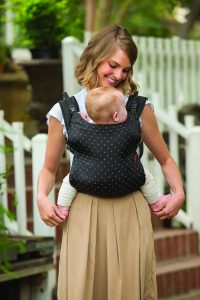
As an example of ergonomic baby carriers Infantino It has these two models which also have the safety seal of the International HIP DYSPLASIA InstituteI'm sorry, but it seems like you forgot to provide the text that needs to be translated. Please provide the text you would like me to translate from Spanish to English.
Baby carrier CUDDLE UP, With a beautiful and functional design, it is an ideal solution for everyday use. Its ergonomic seat allows carrying children weighing from 3.5 to 18 kg.
It also features a removable hood, padded and adjustable shoulder straps, and is machine washable.


Baby carrier ZIP TRAVEL, ideal for taking anywhere due to its compact folding and light weight of only 241 grams. It is suitable for children weighing between 5.5 to 18 kg. The straps and belt are adjustable and padded. This baby carrier can be folded into the belt when not in use.
Leave a comment
Log in to post comments