When should complementary feeding begin?
Introduction to complementary feeding
According to the National Association of Pediatric Nursing, babies' nutritional needs are met through breastfeeding or formula milk until they are six months old.
What is formula milk?
Formula milk refers to an artificial substitute for breast milk. It is usually produced from cow's milk.
From six months onwards, babies begin to observe and imitate their parents' feeding habits, and it is at that moment when the baby may be ready to start with "complementary" foods.
What are complementary foods?
Complementary feeding occurs when the child needs additional food apart from breast milk.
Complementary foods are any food or liquid other than breast milk.
Some of the foods that are usually given are:
- Purees
- Fresh fruits and vegetables
- Legumes, meats, fish...
It is very important to introduce foods according to the child's adaptation since not all of them accept them in the same way.
How do I know when my baby is ready to start with new foods?
To know if your baby is ready to introduce new foods into their diet, you should look at some aspects such as:
- He keeps his head and body upright when sitting.
- He is interested in the food of adults or people around him, even opening his mouth when offered food.
- The baby is able to swallow the food instead of pushing it out with the tongue.
First foods and utensils
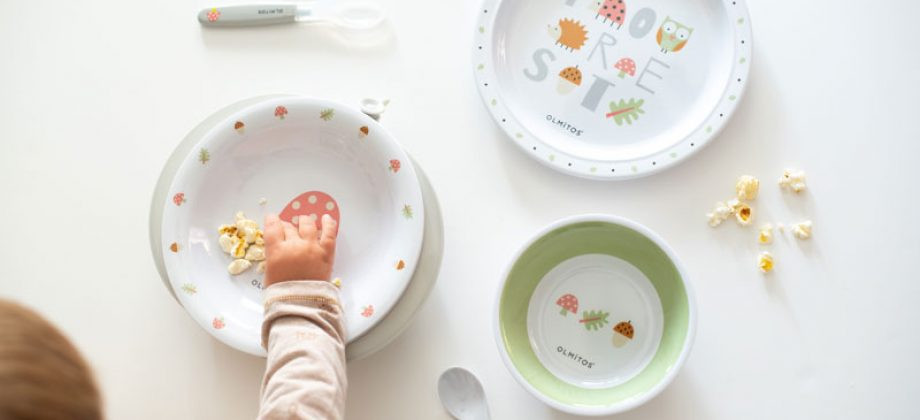
Melamine tableware OlmitosStarting at six months, when the baby is able to sit more or less on their own and can grab things with their hands and bring them to their mouth, the pediatrician will recommend including cereals or fruits in the baby's diet so they can start getting to know new flavors and textures and begin introducing them to what will be their diet from now on.
Once your baby is already used to cereals, you can introduce a new food every 3 to 5 days to allow their digestive system to adapt and monitor possible allergic reactions to the foods.
The safest way to introduce pureed food is by using small amounts on the tip of a silicone spoon that won't harm their gums. These spoons are soft, with a flexible bite and easy to grip.
When you are going to introduce small pieces of fruit or vegetables to him, you can do it safely with an anti-choking feeder, which not only reduces the risk of choking but also helps soothe gum pain.
From 9 months old is when babies are able to bring food to their mouths by themselves, becoming more autonomous.
To make the transition from the bottle to adult cups, we can use training cups, which have double handles for easy gripping and a lid to prevent the baby from spilling the contents.
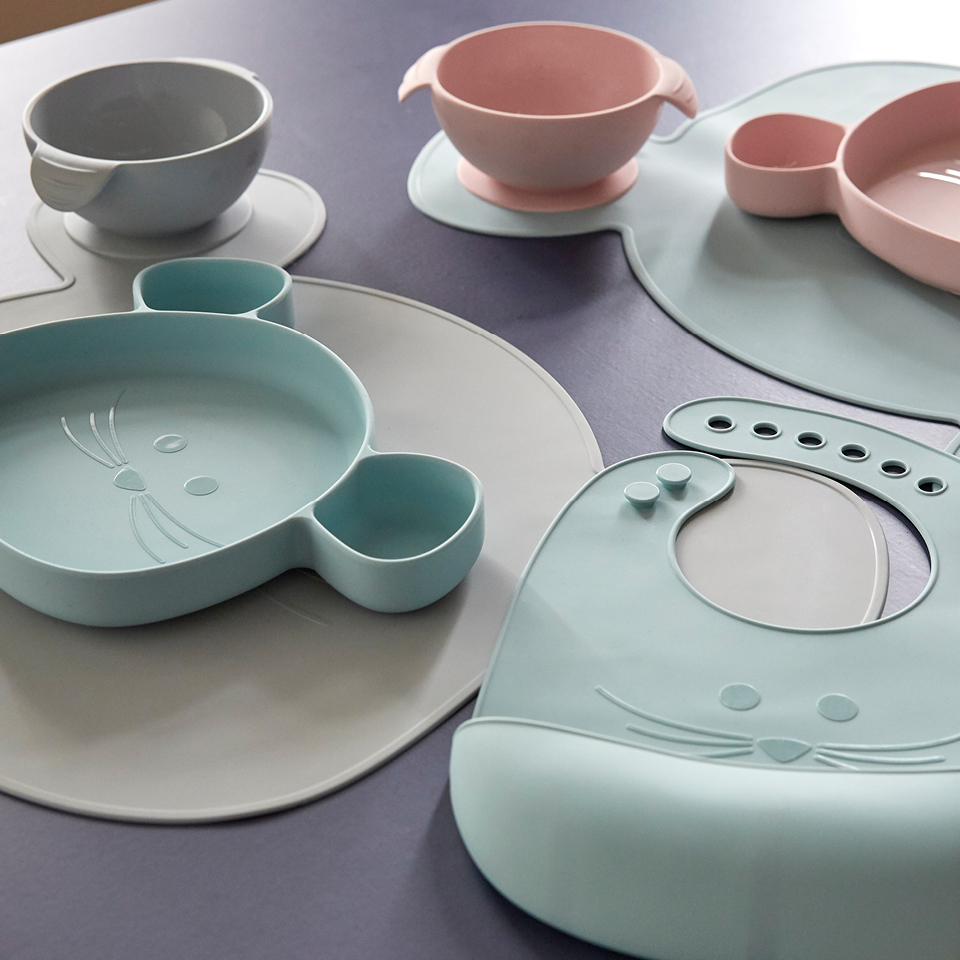
Cellulose tableware LässigWhen it comes to choosing tableware, there are different formats, materials, colors, and sizes to choose from. There are melamine tableware, silicone tableware, bamboo tableware, or natural fiber tableware. Make sure they are dishwasher safe so that they are much more practical.
There are also dishes that have a non-slip base and a suction cup base that attaches to the table or high chair tray so that the baby cannot grab it and throw it.
Another method for introducing complementary feeding to the baby is called BLW, which consists of introducing solid foods but with certain recommendations to adapt to the baby's hands and to prevent choking. If you are interested in learning more about this method, in this post We can provide you with more information and guidelines. And you, what products and methods have worked best for you to introduce new foods to your baby?
Leave a comment
Log in to post comments